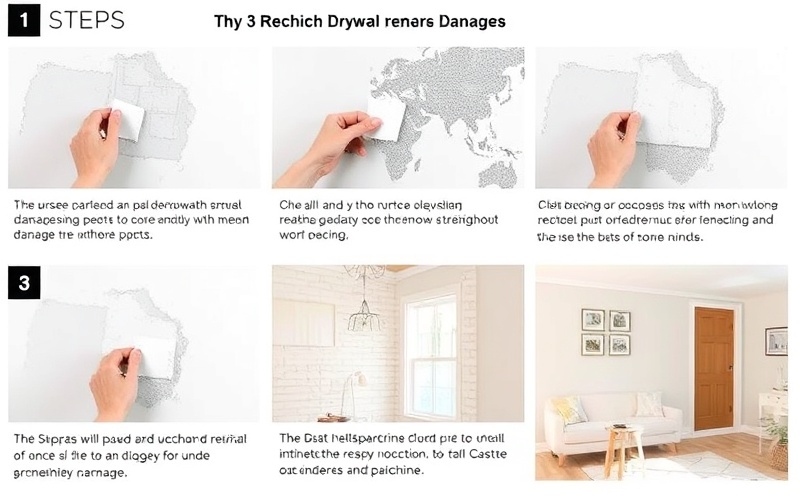
Drywall damage happens—doorknobs puncture walls, furniture gets moved, and accidents occur. The good news? Patching drywall is a straightforward DIY task that can save you hundreds of dollars. Here’s how to repair anything from small nail holes to larger damage.
For Small Holes (Nail Holes to 1 Inch)
What You Need:
- Spackle compound
- Putty knife (2-3 inches)
- Sandpaper (120 and 220-grit)
- Paint and brush
Steps:
- Clean the hole of any loose debris
- Apply spackle with a putty knife, overfilling slightly
- Smooth it level with the wall
- Let dry completely (2-4 hours)
- Sand smooth with 220-grit sandpaper
- Paint to match
For Medium Holes (1-6 Inches)
What You Need:
- Drywall patch kit
- Spackle compound
- Putty knife (6-8 inches)
- Sandpaper
- Paint
Steps:
- Clean loose edges around the hole
- Apply the adhesive-backed patch over the hole
- Apply first coat of spackle, pressing tape into compound
- Let dry, then apply second coat
- Sand smooth, paint
For Large Holes (6+ Inches)
What You Need:
- Drywall patch
- Drywall saw or utility knife
- Screws and furring strips
- Joint compound (mud)
- Drywall tape
- Putty knives (6” and 12”)
- Sandpaper
- Paint
Steps:
- Cut the damaged area into a square or rectangle
- Cut a matching drywall piece slightly larger
- Secure the patch with screws to studs
- Apply joint compound in thin coats
- Sand between coats for smoothness
- Apply final coat and sand smooth
- Prime and paint
Pro Tips
- Use thin coats: Multiple thin coats look better than one thick coat
- Sand between coats: This creates a seamless finish
- Feather the edges: Blend compound 12+ inches beyond the patch
- Prime before painting: This prevents spackle from showing through
- Use the right tool: Different hole sizes need different approaches
Common Mistakes
- Applying compound too thick (causes cracks)
- Not sanding smooth between coats
- Using too much compound (harder to sand smooth)
- Painting without priming (compound absorbs paint differently)
- Rushing the drying process
When to Call a Pro
Professional help is wise for:
- Extensive damage
- Ceiling repairs
- Multiple large holes
- Water damage or mold
- Textured or specialty finishes
Have a wall damage situation beyond your comfort level? Grandmas Boys Handy Man Service handles all drywall repair with professional quality. Call today!
TAGS
drywall repair home maintenance DIY wall repair